

📖 Today’s Edition
The Big Story: Large software companies are now acquiring “AI Analyst” startups, signaling a shift from you analyzing data to AI analyzing it for you.
Trends: As AI agents become autonomous, the new challenge is governance—setting the rules so they don’t run wild.
The Workflow: A step-by-step guide to auto-qualify new sales leads using AI, saving hours of manual work.
🚀 AI News & Breakthroughs

BIG TECH BETS ON AI THAT THINKS FOR ITSELF
HCLSoftware is acquiring Wobby, a startup that builds AI agents to act as data analysts.
The Details:
The acquisition is part of a larger trend where major enterprise software companies are buying startups that specialize in “agentic” AI.
Wobby’s technology allows users to ask questions in natural language and have the AI autonomously query databases and generate insights, acting like a human analyst.
Why it matters (Strategic Analysis):
Foundational models like ChatGPT are becoming a commodity. The real value is in the application. This acquisition signals that the next frontier isn’t just asking AI questions, but giving AI a job. For founders, this means you can soon hire “digital employees” for specific tasks like data analysis, market research, and financial monitoring, radically lowering operational costs.

THE NEW MANAGEMENT CHALLENGE: GOVERNING YOUR AI AGENTS
As businesses deploy more autonomous AI agents, the focus is shifting to governance and control.
The Details:
Companies are realizing that AI agents with the power to act on their own need clear rules, oversight, and “undo” functions.
The risk of an AI agent making a costly mistake (e.g., emailing the wrong offer to a customer list) requires a new layer of management and security.
Why it matters (Strategic Analysis):
Your AI workforce needs a rulebook, just like your human one. This creates a new competitive advantage: the ability to safely deploy autonomous systems. Businesses that master AI governance will be able to automate more aggressively and gain efficiency, while those who don’t will face significant operational and reputational risks.
🛠️ AI Tools to Discover

1. Julius.ai
Your on-demand AI data analyst.
Use Case: Connect your spreadsheets or databases and ask questions in plain English (e.g., “What was our fastest-growing product in Q3?”). Julius finds the answer and creates the charts for you.
Pricing: Starts Free, Paid plans from $20/month.
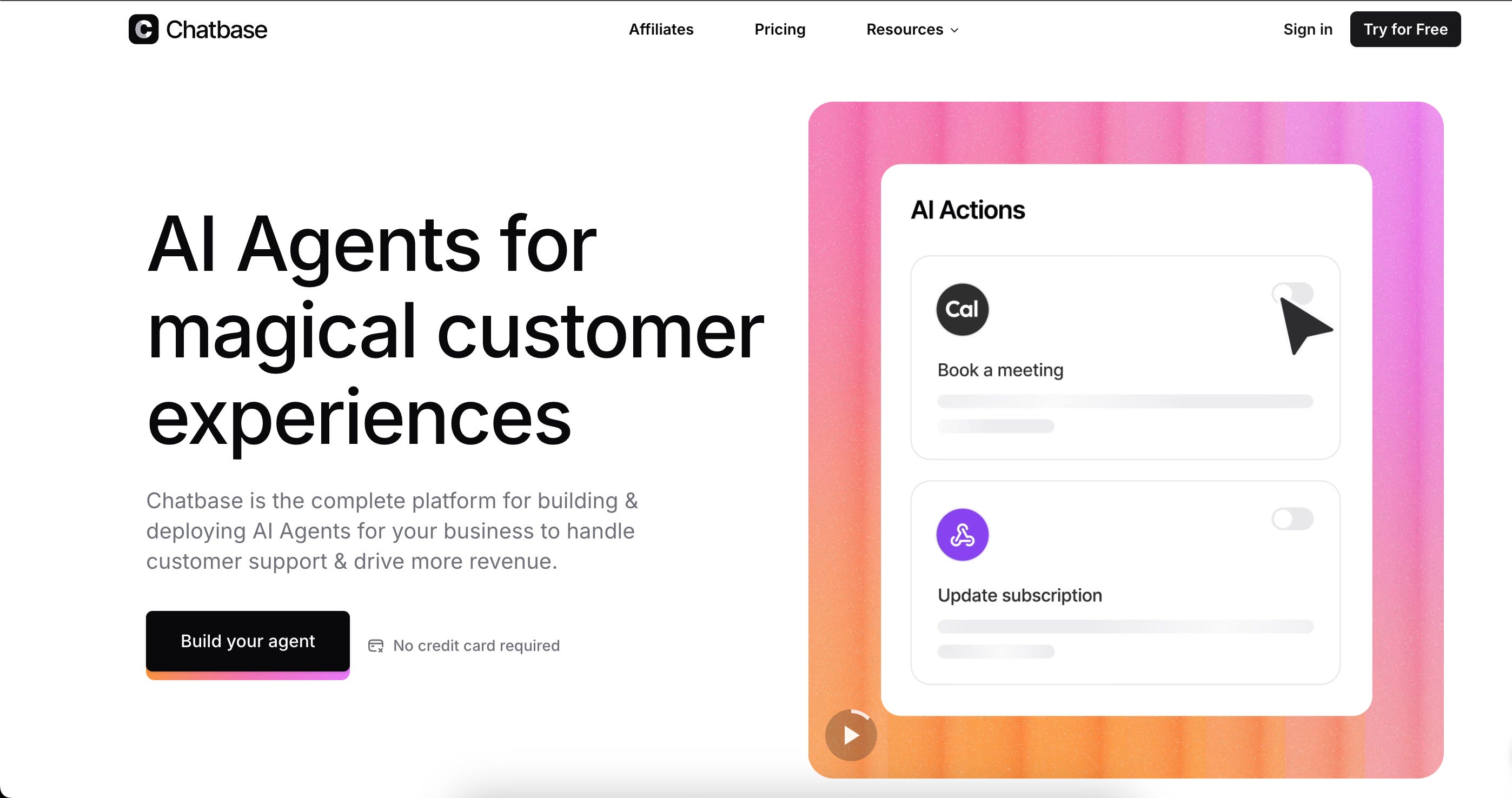
2. Chatbase
Build a customer service chatbot.
Use Case: Upload your website content, help docs, or product info to create a ChatGPT-like bot that can answer customer questions 24/7, reducing support tickets.
Pricing: Free to start, paid plans available.
💡 AI Prompts & Hacks
1. The AI Agent “Rulebook” Prompt
Context: Use this to define the operational boundaries for any AI agent you deploy.
“Act as a Chief of Staff responsible for AI governance. I am deploying an AI agent for [Specify Task, e.g., ‘analyzing customer support tickets’].
Your goal is to create a clear ‘Operational Mandate’ for this agent. The mandate must include:
1. Objective: A single sentence defining its primary goal.
2. Boundaries: Clear ‘do-not-cross’ lines (e.g., ‘Do not communicate with customers directly’).
3. Escalation Protocol: Define exactly when and how the agent should escalate a problem to a human.
4. Reporting: What key metric must it report on daily?
Output Format: A concise, one-page document.”
2. The Workflow Automation “X-Ray” Prompt
Context: Analyze a business process to find the best opportunities for AI automation.
“Act as a senior business process consultant. I want to automate our [Specify Process, e.g., ‘new client onboarding’] process.
The current steps are:
[List the manual steps of your process here]
Your goal is to analyze this workflow and identify the top 3 steps that can be automated with AI. For each step, specify:
1. The nature of the task (e.g., ‘Data Entry’, ‘Standardized Communication’).
2. The specific AI tool category that can solve it (e.g., ‘Email Automation AI’, ‘Data Extraction AI’).
3. The estimated time savings per week.
Output Format: A simple table.”
3. The AI Vendor Due Diligence Prompt
Context: Use this to vet a new AI software provider before you buy.
“Act as a Chief Technology Officer. I am evaluating a new AI tool called [Tool Name] for [Business Use Case].
Your task is to generate a list of critical due diligence questions to ask their sales team. The questions should cover:
1. Data Security: How is our proprietary data handled, stored, and protected?
2. Model Provenance: What underlying AI model do you use, and what are its limitations?
3. Integration: What are the technical requirements for integrating with our existing stack ([List your key software, e.g., ‘Salesforce, Google Drive’])?
4. Reliability: What is your guaranteed uptime and what happens in case of an outage?
Output Format: A numbered list of questions ready to be sent in an email.”
🧑🏫 AI Training: Workflow of the Day
How to Auto-Qualify Sales Leads with AI
The Goal: Save 5+ hours a week by instantly identifying and responding to your best leads.
The Stack: Website Form (e.g., Jotform) + Zapier + ChatGPT
Step-by-step:
Create Your Form: Build a contact or lead magnet form in Jotform. Add a hidden field called “Lead Score.”
Set up the Zap: Create a new Zap in Zapier. The trigger is “New Form Submission” in Jotform.
Add the AI Magic: Add an action step. Choose “Conversation with Assistant” in ChatGPT. In the prompt, tell it to analyze the form data and score the lead from 1-10 based on criteria you define (e.g., company size, budget, specific needs). The prompt should command the AI to only output the numerical score.
Route the Lead: Add a “Filter” step in Zapier. If the score from ChatGPT is above 7, send a notification to your sales team in Slack. If it’s below 7, add them to a nurturing sequence in your email marketing tool.
“The shift from using AI as a tool to deploying it as an autonomous agent is the single biggest operational change businesses will face in the next 24 months.”
— Industry Analysis
In short: Stop thinking about what you can do with AI. Start thinking about what AI can do for you, while you focus on something else.